Furniture fronts and interior acoustics – do material and texture matter?
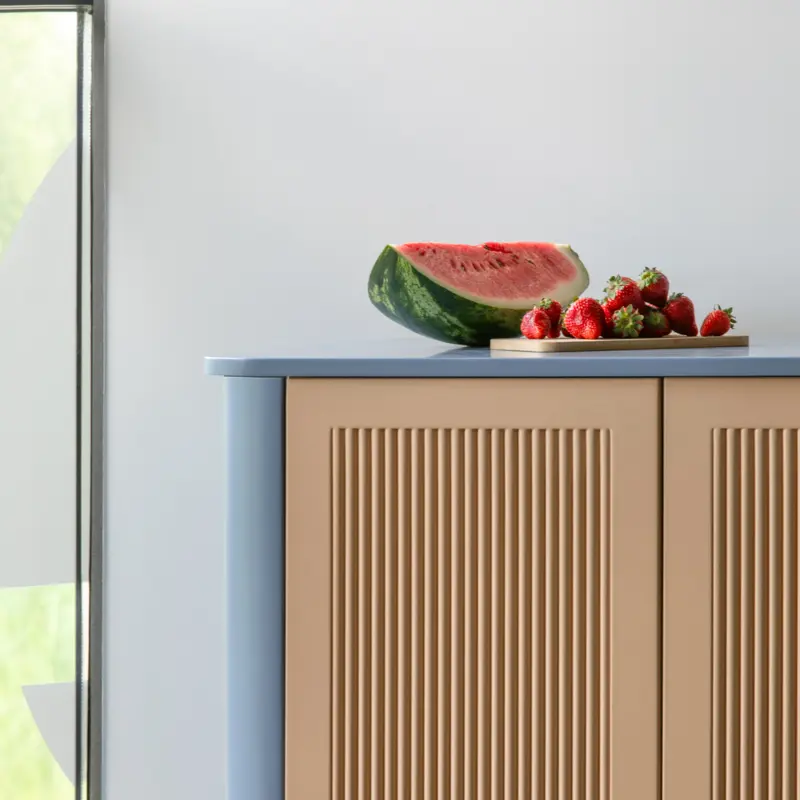
Interior acoustics is increasingly becoming one of the key aspects of residential space design. In open layouts, where the kitchen connects with the living room and tall built-ins reach the ceiling, sound travels freely and may cause unpleasant reverberation. Although the role of floors, textiles, or ceilings is discussed most often, furniture fronts also contribute to shaping the acoustics of a room.
IKEA systems such as METOD or BESTA provide a solid base for cabinetry, while the choice of appropriate fronts can subtly influence how sound is perceived within the space. The differences between a smooth lacquered surface and the texture of veneer or fluted finishes are not purely aesthetic. The structure of the material, its hardness, and the way it reflects light and sound all help create a specific interior atmosphere. In this article, we will examine whether the material and form of fronts can have a real impact on acoustic comfort and how to consciously design built-ins in open-plan spaces.
Interior acoustics is increasingly becoming one of the key aspects of residential space design. In open layouts, where the kitchen connects with the living room and tall built-ins reach the ceiling, sound travels freely and may cause unpleasant reverberation. Although the role of floors, textiles, or ceilings is discussed most often, furniture fronts also contribute to shaping the acoustics of a room.
IKEA systems such as METOD or BESTA provide a solid base for cabinetry, while the choice of appropriate fronts can subtly influence how sound is perceived within the space. The differences between a smooth lacquered surface and the texture of veneer or fluted finishes are not purely aesthetic. The structure of the material, its hardness, and the way it reflects light and sound all help create a specific interior atmosphere. In this article, we will examine whether the material and form of fronts can have a real impact on acoustic comfort and how to consciously design built-ins in open-plan spaces.


